
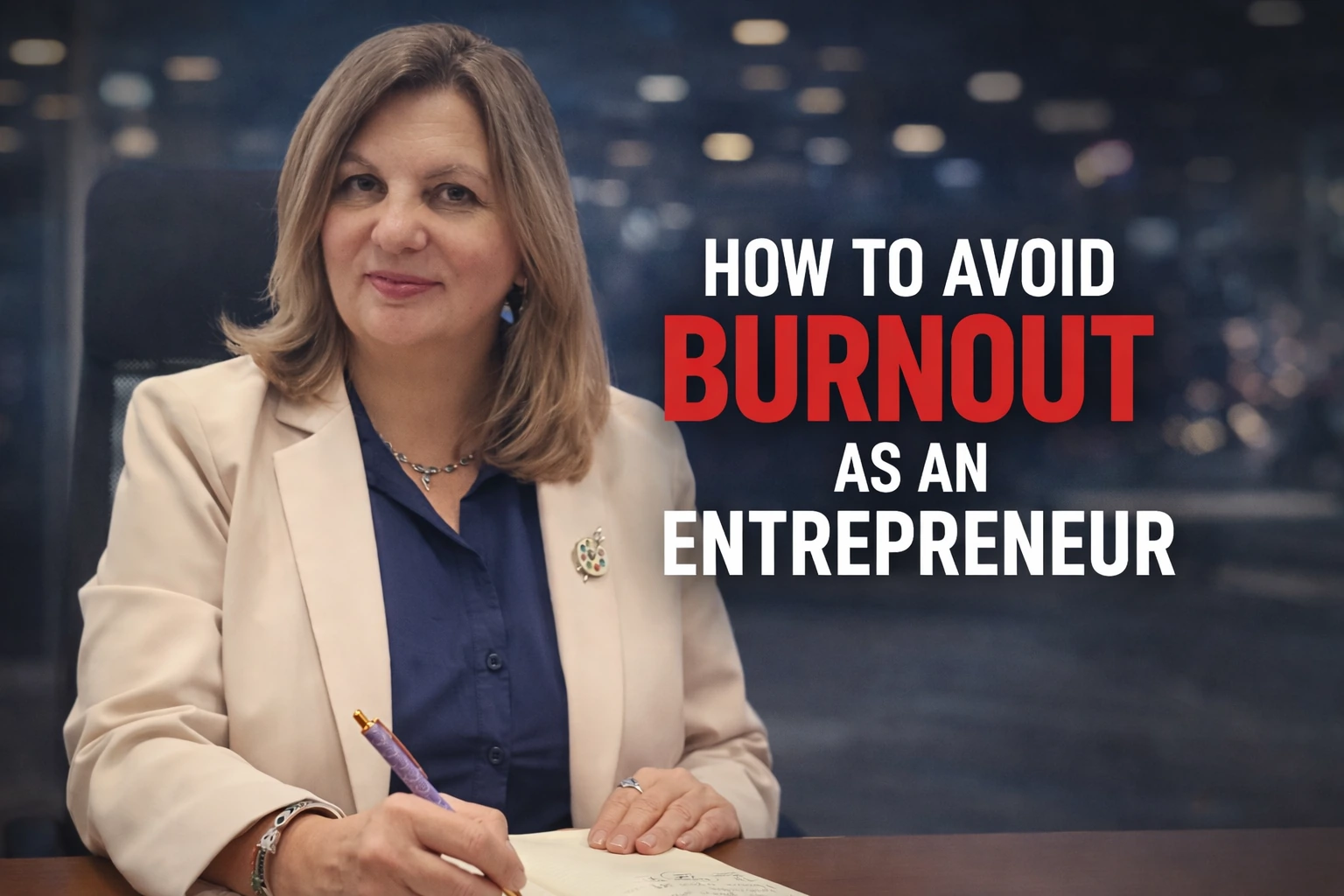
Many entrepreneurs start with energy, ambition, and big goals, but over time they run into the same problem: the business grows, yet life becomes more chaotic. Decisions become heavier, the workday stretches endlessly, and the founder starts carrying too much on their shoulders. At that point, the real question is no longer only how to grow, but how to build a business in a way that stays sustainable.
This is where business structure matters. A healthy company is not only about revenue. It is about understanding who is responsible for what, how decisions are made, how motivation is maintained, how focus is protected, and how the founder avoids turning success into long-term burnout. In Astarly terms, this is not just about business growth. It is about building a business you can actually live inside for many years.
Why structure matters more than motivation alone
Many founders try to solve everything with discipline and motivation. But motivation without structure is unstable. A business becomes stronger when roles are clear, responsibilities are visible, and people understand the hierarchy of work inside the company.
When there is no clarity, founders absorb too much, teams depend on emotions instead of systems, and growth starts creating stress instead of order. A real business structure creates relief: each person understands their zone, decisions become lighter, and the company stops depending on constant emergency energy.
Who is responsible for what
One of the most important business questions is simple: who is responsible for what? Many companies struggle not because of a lack of talent, but because responsibilities are blurred. The founder decides too much, partners overlap, and employees work without clear ownership.
Healthy growth begins when the company defines roles honestly. Someone is responsible for strategy. Someone is responsible for operations. Someone is responsible for execution. Someone is responsible for client results, communication, finance, or growth. Once these zones become visible, the business becomes more manageable and less emotionally exhausting.
Hierarchy is not control — it is order
Many modern founders are uncomfortable with hierarchy because they associate it with pressure or rigidity. But business hierarchy is not about ego. It is about order. A company needs clear lines of responsibility, decision-making, and accountability.
Without hierarchy, people waste energy negotiating obvious things, responsibilities get mixed, and founders remain trapped in constant supervision. With hierarchy, each person understands where decisions come from, who leads a process, and how work moves from idea to result.
Leadership and motivation
A strong leader does more than assign tasks. A strong leader motivates. But real motivation is not shallow excitement. It is the ability to connect people to meaning, movement, and responsibility.
In the business philosophy of Tetiana Matviienko, motivation is not only external pressure or rewards. It is a deeper system where a person understands why they are doing the work, how their effort matters, and what kind of growth becomes possible through responsibility. This kind of motivation is more stable than emotion. It creates engagement without constant force.
Personality type and entrepreneurial orientation
Not every entrepreneur is built to make decisions in the same way. Some people are naturally strong in communication, some in structure, some in intuition, some in discipline, and some in growth vision. That is why modern entrepreneurial orientation is not only about choosing a profession. It is about understanding your type.
When a founder understands their personality structure, many things become clearer: which decisions come easily, which tasks bring energy, which responsibilities slowly destroy inner stability, and where support is needed. This changes everything. Instead of trying to become a copy of someone else, a person can build a business model that fits their real strengths.
Some decisions give energy, others destroy it
One of the most important insights for founders is that not every type of decision costs the same amount of energy. Some decisions feel natural. Others drain energy, create self-conflict, and lead to long-term exhaustion.
That is why entrepreneurial maturity is not only the ability to make more decisions, but the wisdom to understand which decisions belong to you, which should be delegated, and which should never become your constant cognitive load. Many people burn out not from work itself, but from living too long outside their natural zone.
Changing the angle of thinking
Business growth always requires mental growth. A founder cannot build a larger life with the same inner angle of vision that created confusion in the first place. This is why changing mindset is not a fashionable extra. It is a practical necessity.
Neurotransformation, in simple language, is the process of teaching the brain to hold a different perspective. Instead of reacting only from pressure, survival, and scattered attention, a person learns to think from clarity, structure, focus, and internal stability. The external business changes faster when the internal lens changes too.
Focus, “sostedotochka,” and the ability to hold attention
One of the most valuable entrepreneurial abilities today is not speed, but focus. Attention is now under constant attack from messages, meetings, noise, stress, and fragmented tasks. If attention is never gathered, strategy becomes weak and the day gets consumed by reaction.
The idea of “sostedotochka” can be understood as the point where attention gathers. In business, this means the ability to bring scattered energy back into one clear direction. Founders who learn this skill make better decisions, waste less energy, and create stronger momentum.
Focus is trainable. It grows through fewer unnecessary switches, more deliberate priorities, and a healthier rhythm of work and rest.
Golf, wealthy environments, and the power of context
People often ask whether things like golf are just a luxury for the rich or a real growth environment. The deeper answer is that environments shape people. Wealthy circles are not powerful only because of status, but because they normalize a different level of thinking, behavior, conversation, and opportunity.
Golf is one example of a space where relationships, calmness, patience, and long-term conversations happen naturally. The broader principle matters even more than the game itself: environment is an instrument of growth. The people around you influence your standards, your speed of thinking, your confidence, and even what kind of future feels realistic.
Anti-burnout is not optional for founders
Many entrepreneurs still treat burnout prevention as something secondary. But in reality, anti-burnout is part of business strategy. A founder who loses clarity, health, and emotional stability eventually weakens the company too.
A real anti-burnout system includes more than vacations. It includes energy management, realistic work rhythms, recovery windows, fewer unnecessary decisions, and the ability to stop glorifying overload. Founders need a system where success does not automatically require self-destruction.
How to rest without harming the business
Rest is not the opposite of business. Good rest protects the quality of business. The real problem is not rest itself, but chaotic work without recovery. A founder who never resets starts making worse decisions, reacting emotionally, and carrying invisible fatigue into every conversation.
One of the most useful principles is understanding your strongest business hours. For many people, the most effective deep-work window is from 10:00 to 14:00. This period can hold the highest-value thinking, decisions, strategy, and creation. Recovery and lighter tasks can then be built around that core instead of destroying it.
The three questions that shape the day
A strong workday rarely begins with chaos. It begins with orientation. A simple system such as three morning questions can dramatically improve the founder’s day: What matters most today? What will actually move the business forward? What must not steal my attention today?
These questions sound simple, but they bring the mind back into intention. They protect the founder from reaction and reconnect the day with business priority.
The “dance circles” system of the workday
One of the most interesting ideas in entrepreneurial productivity is the principle of changing activity instead of getting stuck in one exhausted mode all day. The “dance circles” approach can be understood as a rhythm where a person moves between different types of work intentionally: strategy, communication, operations, creation, recovery, movement, and lighter administrative blocks.
This method reduces stagnation, protects energy, and prevents the dead zone where a founder is technically working but mentally already depleted. The point is not randomness. The point is intelligent alternation, so the brain keeps moving instead of collapsing into monotony and burnout.
What this approach gives in the end
When an entrepreneur begins to build business in this way, the result is bigger than productivity. The result is a working structure of business and day. There is more clarity around roles and hierarchy. There is a personal system of focus and recovery. There is a healthier relationship with motivation, decision-making, and energy.
Most importantly, the founder starts to understand how to stay in business for a long time without burning out. That is not a soft benefit. It is one of the strongest business advantages a person can have.
The final idea: the business code
At the highest level, all of this comes together as a business code — a personal and structural system that defines how the entrepreneur lives, builds, partners, hires, leads, rests, focuses, and grows. This includes principles of entrepreneurship, attitudes toward money and profit, codes of partnership, codes of hiring and environment, personal mission, business hierarchy, anti-burnout systems, and daily focus rituals.
A founder without a code reacts to life. A founder with a code creates it. On Astarly, this matters because business is not only about earning more. It is about building a structure that can hold both growth and life at the same time.